
News & Updates
How to Wash Pollen Off Your Car (Without Damaging the Paint)
September 22, 2026 · Updated September 23, 2026
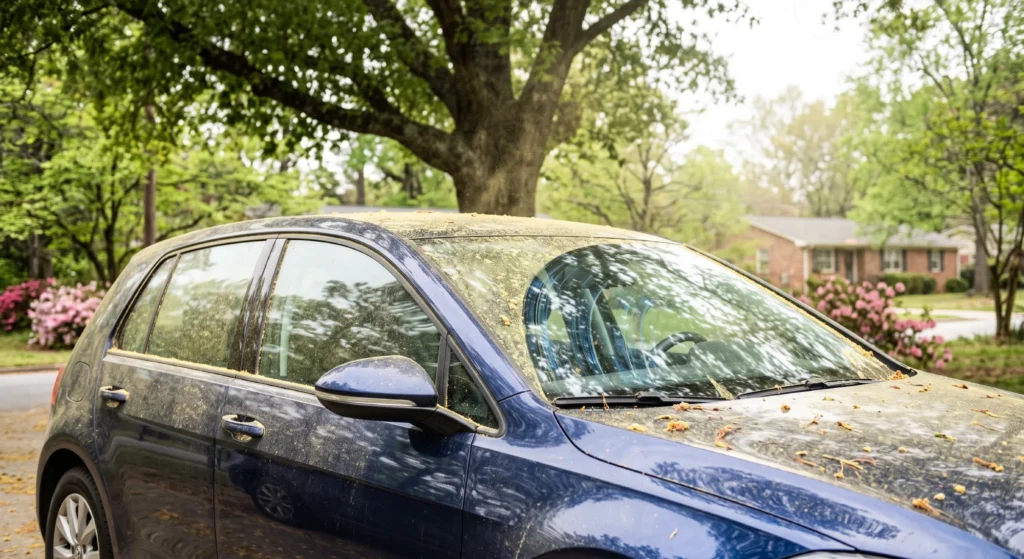
You washed your car on Saturday. By Monday morning, it looks like someone dusted it with yellow chalk. If you live anywhere in Central New Jersey, you already know the routine — spring means pollen, and pollen means your car never stays clean for long.
Most drivers treat pollen like regular dirt: wipe it off with a rag, hit it with the windshield wipers or wait for the next rain. That instinct makes sense, but pollen is not regular dirt. It has a structure and chemistry that can actually damage your car’s finish if you handle it the wrong way.
This guide covers what pollen does to automotive paint, which removal methods help and which ones make things worse, and how to keep your car looking decent during the worst weeks of pollen season in New Jersey.
Why Pollen Is Harder on Cars Than It Looks
Pollen grains are tiny — most are between 10 and 100 microns — but they are not smooth. Under a microscope, pollen from trees like oak, pine and birch has a rough, spiky or ridged surface. When dry, those grains sit on your paint without doing much harm. The problems start when moisture enters the picture.
Pollen and Moisture Create Acid
When pollen gets wet — from dew, a light rain or even morning humidity — the outer shell of the grain breaks open and releases proteins and organic compounds. These compounds are mildly acidic. On automotive clear coat, that acidity can etch faint marks into the surface if it sits long enough. The result looks like water spots, but it is actually a chemical stain that may need polishing to remove.
This is why a car that sat through a light spring shower often looks worse than one that stayed dry. The rain was not heavy enough to rinse the pollen away, but it was enough to activate the acids inside the grains.
Pollen Grains Are Abrasive When Dragged
Because pollen has a rough texture, wiping it across the paint with a dry cloth creates fine scratches — the same type of swirl marks you get from improper washing. A thick layer of pine pollen dragged with a microfiber towel or a California duster will leave marks that show up clearly on dark-colored vehicles.
What Not to Do
Before getting into the right approach, here are the most common mistakes drivers make with pollen — and why each one causes more harm than good.
Do Not Dry-Wipe the Surface
This is the biggest one. Reaching for a towel, a duster or even your hand to swipe pollen off a dry car drags abrasive particles across the clear coat. Every pass leaves micro-scratches. On black, navy or dark gray paint, the damage shows as a haze of fine swirl marks that are visible in direct sunlight.
Do Not Use the Windshield Wipers on Dry Pollen
Your wipers are designed to clear water, not dry particles. Running them across a pollen-coated windshield grinds the grains into the glass and rubber. It wears out the wiper blades faster and can leave streaks that are harder to remove than the pollen itself. Use the washer fluid first to wet the surface, then run the wipers.
Do Not Wait for Rain to Handle It
A heavy downpour will wash pollen away. A light or moderate rain will not. It will wet the pollen just enough to release the acidic compounds, spread the residue into every crevice and then dry in place, bonding more firmly to the paint than it was before. Relying on rain often makes the situation worse.
Do Not Use Dish Soap at Home
Dish soap cuts grease effectively, which is exactly why it is wrong for car paint. It strips away wax, sealant and any protective coating on the surface. After a dish soap wash, your paint is completely unprotected — and the next layer of pollen bonds directly to bare clear coat instead of sitting on top of a slick wax layer.
The Right Way to Remove Pollen From Your Car
The principle is simple: soften and lift the pollen with water before anything touches the paint. Here is how to do it properly, whether you are washing at home or going through a car wash.
Step 1: Rinse Thoroughly Before Contact
Use a strong stream of water to rinse the entire car before any cloth, mitt or brush touches the surface. The goal is to float the pollen off the paint with water pressure alone. This single step prevents the majority of pollen-related scratches. Spend extra time on the hood, roof and trunk lid — the flat horizontal surfaces where pollen settles heaviest.
Step 2: Wash With Plenty of Lubrication
Whether you are using a wash mitt at home or going through a tunnel wash, the key is lubrication. The wash solution should create a slippery layer between the cleaning surface and the paint so any remaining pollen particles glide off instead of being ground in. Use a dedicated car wash soap — never dish soap or all-purpose cleaner.
Step 3: Rinse Again and Dry Properly
After washing, rinse the car completely to remove all soap and loosened pollen. If you are drying by hand, use a clean, high-quality microfiber towel and pat or blot rather than dragging. For the best result, a forced-air dryer eliminates contact entirely.
Step 4: Apply a Protective Layer
A coat of spray wax or sealant after washing gives the paint a slick surface that makes it harder for the next wave of pollen to stick. It also makes your next wash faster and more effective, because the pollen sits on top of the wax instead of bonding to bare paint. During peak pollen season, reapplying a spray sealant every wash or two is worthwhile.
How Often to Wash During Pollen Season
In Central New Jersey, pollen season runs roughly from late March through June, with the heaviest weeks typically falling in April and May. Tree pollen — especially oak, birch, cedar and pine — accounts for the thick yellow coating that covers cars parked outdoors.
During peak weeks, a wash every 7 to 10 days keeps pollen from building up to the point where it causes paint damage. If your car sits outside overnight and you are seeing a visible yellow film every morning, weekly washes are a reasonable frequency. You do not need to detail the car each time — a quick express wash that starts with a strong rinse and finishes with a sealant is enough to reset the surface.
Outside of peak weeks, every two weeks is usually sufficient. The goal is to prevent pollen from sitting on the paint long enough for moisture to activate the acids inside the grains. Consistent washing matters more than aggressive washing.
Does Pollen Season End All at Once?
Not exactly. New Jersey has multiple pollen waves through the spring and early summer:
- Late March to May: Tree pollen. This is the yellow dust most drivers notice — oak, birch, maple, pine and cedar are the primary sources. Pine pollen is the most visible, but oak pollen is typically the most abundant.
- May to July: Grass pollen. Less visible on car surfaces than tree pollen, but still present. Grass pollen tends to be lighter and finer.
- Late summer to fall: Weed pollen, including ragweed. This affects allergy sufferers more than car owners, but it still contributes to surface buildup.
The heaviest car-coating weeks are usually the tree pollen period in April and May. Once that passes, the daily accumulation drops noticeably, even though pollen is still in the air through the summer.
Parking and Prevention Tips
You cannot avoid pollen entirely unless you keep your car in a sealed garage, but a few habits reduce how much accumulates between washes:
- Park in a garage when possible. Even a carport or covered parking structure reduces pollen accumulation significantly compared to open-air parking.
- Avoid parking under trees. This sounds obvious, but a car parked under an oak or pine tree during pollen season will collect several times more pollen than one parked in an open lot 50 feet away.
- Keep a spray bottle of quick detailer in the car. If you need to touch the surface between washes — to clear the windshield or clean a mirror — a quick spritz of detail spray provides the lubrication needed to avoid scratching.
- Maintain your cabin air filter. This does not help the outside of your car, but a clean cabin filter keeps pollen out of the interior. Most filters should be replaced annually, ideally before pollen season starts.
Keep Your Car Ahead of Pollen Season
Pollen is a seasonal nuisance that every Central Jersey driver deals with, but it does not have to leave a lasting mark on your car. The key is simple: rinse before wiping, wash regularly and keep a layer of protection on the paint.
Cosmo Car Wash on Route 9 in South Amboy is open seven days a week through pollen season and beyond. Our express tunnel starts with a high-pressure rinse that lifts pollen before contact, and every wash tier includes wheel and lower body coverage. Add a sealant application to keep your paint protected between visits. Drive through on your commute or between errands — it takes a few minutes and saves your finish from weeks of buildup.